Strategic Partnership & Initiatives Lead
A role in the District Leadership Team.
Purpose of the role
The Strategic Partnership & Initiatives Lead is a member of the District Leadership Team, reporting to the District Lead Volunteer.
They lead the District’s approach to developing and maintaining strategic relationships with external organisations, and lead or coordinate strategic initiatives which support the District’s priorities and long-term development.
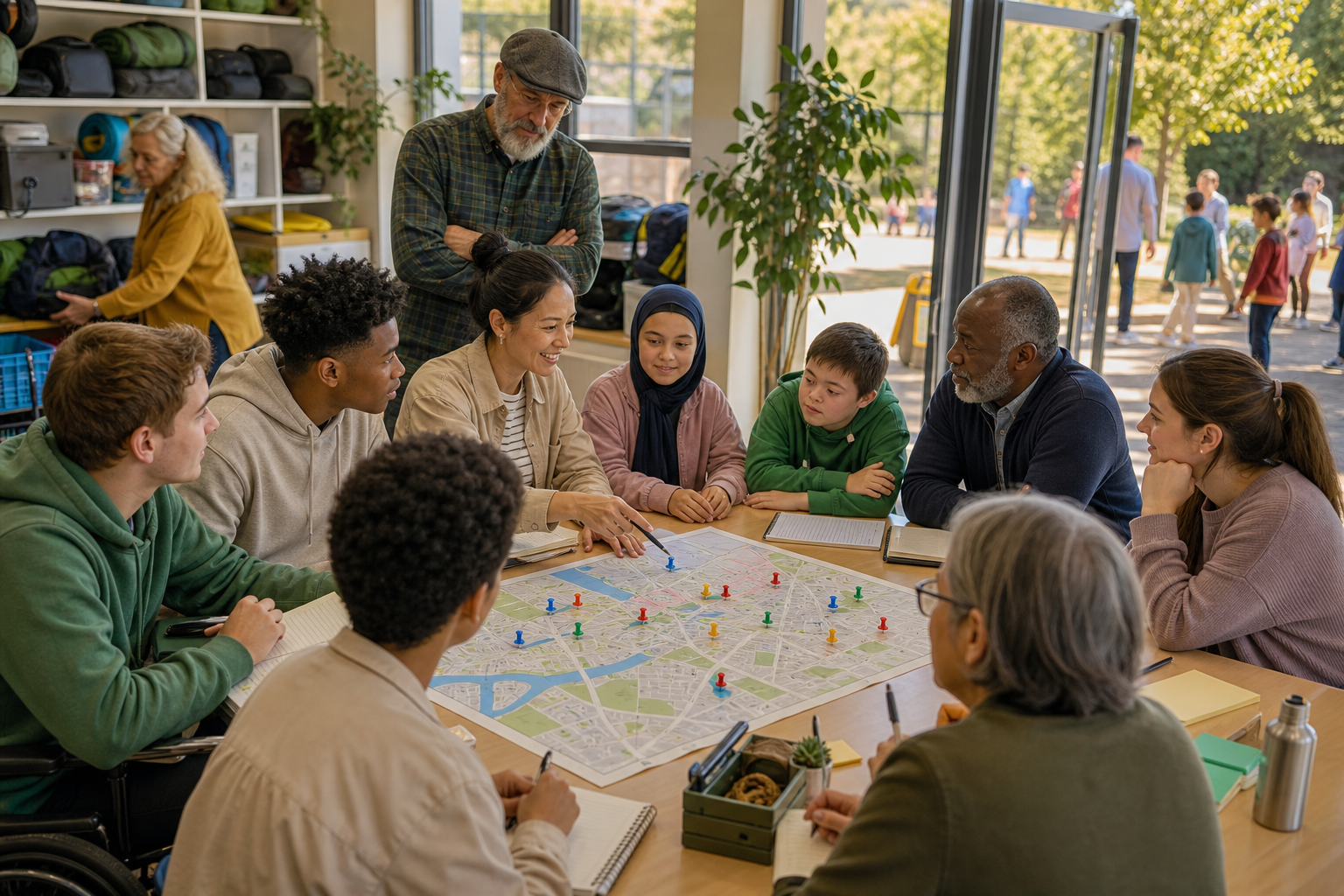
A key part of the role is helping the District understand the communities it serves, identifying where young people may be underrepresented or face barriers to participating in Scouting, and developing initiatives which make Scouting accessible to a broad and representative cross-section of our local communities.
Responsibilities
The Strategic Partnership & Initiatives Lead will:
- Establish, develop and maintain key District-wide strategic partnerships with external organisations, such as the Heritage Foundation, schools, local organisations, charities and other community partners.
- Act as the principal District liaison for agreed strategic partners, providing a consistent and reliable point of contact.
- Identify organisations with which the District could develop new strategic relationships, particularly where these support the District’s priorities and long-term development.
- Work with the District Lead Volunteer and wider District Leadership Team to identify where external partnerships could help achieve the District’s strategic objectives.
- Build relationships that create opportunities for collaboration, shared resources, access to facilities, community engagement, volunteering and activities for young people.
- Coordinate relationships where a partner works with several Groups, Sections or District teams, helping ensure that engagement is joined-up and that partners have a clear route into the District.
- Support Groups and District teams in establishing relationships with external organisations where a District-level introduction or coordinated approach would be beneficial.
- Represent the District at appropriate meetings and events with partner organisations.
- Lead or coordinate agreed strategic initiatives on behalf of the District Leadership Team, particularly where an initiative spans multiple Groups or District teams or does not naturally sit within an existing team.
- Help the District understand whether Scouting is reaching a broad and representative cross-section of the communities we serve, using appropriate data and local insight to identify areas of underrepresentation.
- Identify barriers which may prevent young people from accessing or participating fully in Scouting, including financial, geographic, social, cultural and practical barriers.
- Develop and coordinate initiatives which improve equitable access to Scouting, with particular attention to communities and young people who are currently under-represented or who may experience greater barriers to participation.
- Work with Groups and District teams to turn insight into practical action, helping to ensure that opportunities to expand the reach of Scouting are sustainable and appropriate to the communities involved.
- Where appropriate, develop partnerships with schools, community organisations, charities, local authorities and others which can help the District reach young people who may not otherwise encounter or access Scouting.
- Ensure important partnership commitments, opportunities, initiatives and actions are communicated to the relevant members of the District Leadership Team and other volunteers.
- Work with other District teams where partnerships or strategic initiatives overlap with areas such as programme, growth, community engagement, fundraising, property or communications.
- Maintain an overview of the District’s significant external partnerships and strategic initiatives, including key contacts, objectives, commitments and progress.
- Periodically review strategic partnerships and initiatives to understand their impact and ensure they continue to support the District’s priorities.
- Promote a professional, positive and consistent representation of Scouts when working with external organisations.
What success looks like
The District has a manageable portfolio of strong, active partnerships which support its strategic priorities. Key external organisations know who to contact within the District, relationships are maintained consistently rather than depending upon individual connections, and opportunities created through partnerships are effectively shared across the District.
The District has a good understanding of the communities it serves and can identify where young people are underrepresented or face barriers to participating in Scouting. This understanding leads to practical action, with targeted initiatives and partnerships helping Scouting become accessible to a broader and more representative range of young people.
Groups and District teams are able to benefit from relationships and initiatives that would be difficult to establish individually, while partners see the District as a reliable, professional and constructive organisation to work with.